Hatch bloodline guide: McLean, Gilmore, Blueface and yellow-legged Hatch
The Hatch families as the written accounts describe them, including where they disagree.
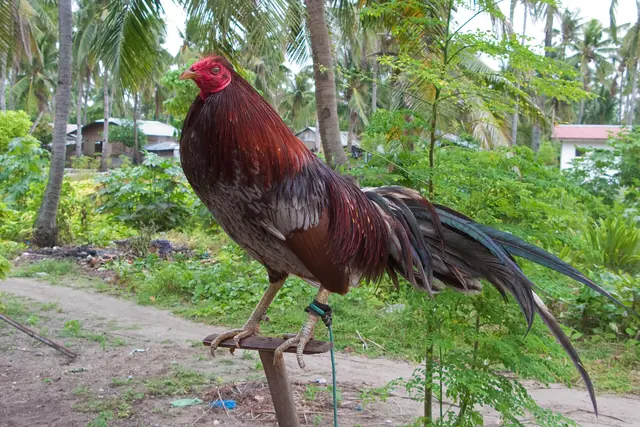
Hatch blood sits behind many Filipino breeding programmes, either kept pure or used as an ingredient in crosses. This guide follows the line from E.S. “Sandy” Hatch to the McLean, Gilmore, Blueface and yellow-legged families, quoting the written accounts and showing where they disagree.
Sandy Hatch and the “straight stuff”
The line is named after E.S. Hatch, known as “Sandy” (some writers give his name as Sanford), a breeder in the north-eastern United States in the early 20th century. The most detailed first-hand account comes from Harry Parr, writing in 1977 from his own breeding records:
- According to Parr, Hatch’s fowl were built from four bloodlines: two Kearney strains Mike Kearney brought from Ireland (the light-red Whitehackles and the Brown Breasted Reds), the Herman Duryea fowl commonly called Boston Roundheads, and the green-legged Thomson fowl.
- Parr says Hatch gave birds to his friend Ted McLean in the early 1930s. McLean and Parr called the four-way blend “the straight stuff”.
- McLean retired in December 1954 and gave all his fowl to Parr, who said he never sold them.
Other writers give different origin stories for Hatch’s birds, including green-legged fowl from Long Island breeders and a black-red cock from Harry Genet. Hatch himself is quoted as saying he “added lots of new blood” over the years. So “pure Hatch” means different things in different yards.
Note: some popular write-ups say Hatch blended Hoagland Brassbacks and Thompson Whites. We couldn’t find a first-hand source for that, so we follow Parr’s account.
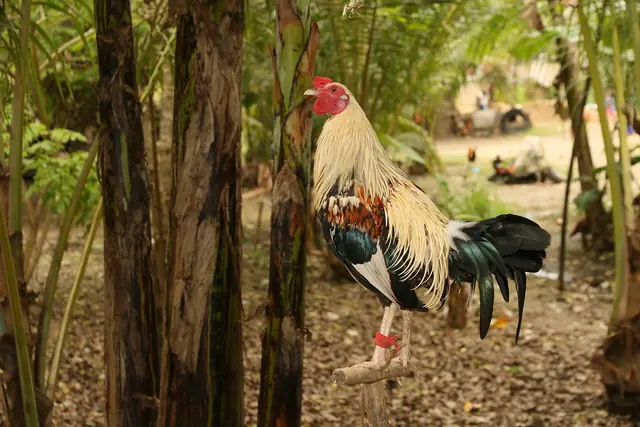
The main Hatch families
| Family | Commonly described looks | What the accounts say |
|---|---|---|
| McLean Hatch | Straight or pea comb, green or yellow legs, dark red | Ted McLean’s yard of Hatch “straight stuff”, later held by Harry Parr (Parr, 1977). Parr wrote that pure McLean Hatch were valued mainly as an ingredient for crosses. |
| Gilmore Hatch | Usually dark, green-legged; breeders often mention pea combs | Kept by Lun Gilmore of Texas. One account (Ray Alexander) says Gilmore bred a McLean rooster over green-legged hens with McLean blood. Another says his birds came directly from Sandy Hatch and Mike Kearney. The accounts don’t agree. |
| Blueface Hatch | Breeder descriptions vary; often dark-plumaged | Parr describes the Blue Face family as an offshoot of the McLean Hatch. |
| Yellow-legged Hatch | Yellow shanks, often pea comb | Several American yards kept yellow-legged Hatch families. The Sweater story itself starts with a yellow-legged Hatch cock (see our Sweater × Kelso guide). There is no single founding account. |
Looks are breeder descriptions and vary within every family. A band number and pedigree record are the only reliable way to know what a bird is.
Using Hatch blood in a three-way cross
A common plan uses Hatch as one quarter of a three-way cross. The pedigree maths is simple:
- Generation 1: a Hatch cock over Kelso hens gives pullets that are 1/2 Hatch, 1/2 Kelso.
- Generation 2: a Sweater cock over those pullets gives chicks that are 1/2 Sweater, 1/4 Kelso, 1/4 Hatch.
Run any combination in the cross calculator: tick “the hen is a 50/50 cross” and choose her two parent lines. Remember that these fractions are pedigree averages. They don’t predict how an individual bird will turn out.
Raising heavier-framed stags
Breeders often describe Hatch crosses as heavier-boned and slower to mature than lighter lines. Whatever the line, growing birds need a complete grower feed at the rate on the bag, clean water, shade and space to range, plus a deworming and vaccination plan from your veterinarian. Skip any product that promises bone or muscle “boosts”. Check what the label actually says in our agrivet product notes.
For more family trees and terminology, see the SabongWiki.ph gamefowl bloodlines encyclopedia and the breeders hall of fame on SabongWiki.ph.
- Harry Parr (1977), history of the McLean Hatch, reprinted on Ang Sabong: angsabong.blogspot.com
- Ray Alexander, “Origins of McLean, Gilmore, and Sweater Blueface Hatch”, reprinted on Mỹ Tho Gamefowl: gadamytho.blogspot.com
- “Gilmore Hatch”, Rooster Village: roostervillage.wordpress.com
- Hatch history compilation with the competing origin accounts (Piper, “Fulldrop”, Holcomb, Beattie), ManokHub: manokhub.com
- SabongWiki.ph bloodline table: sabongwiki.ph